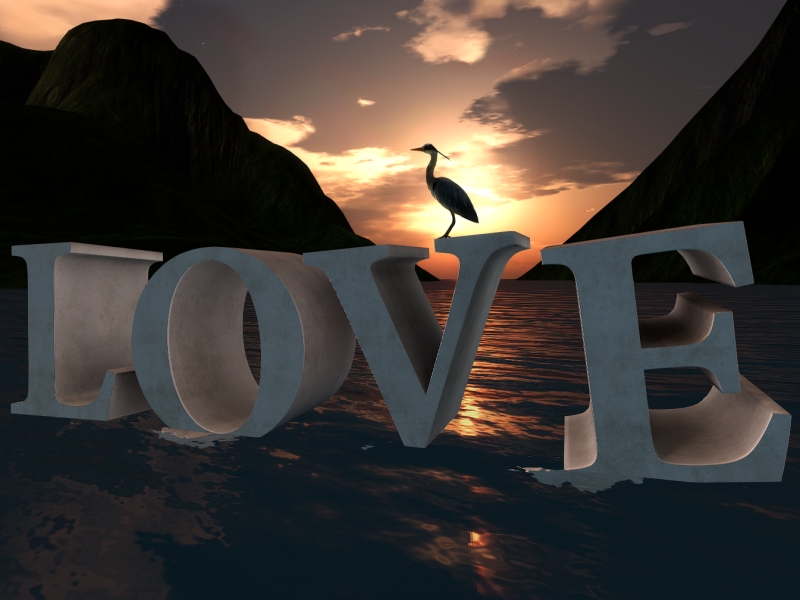
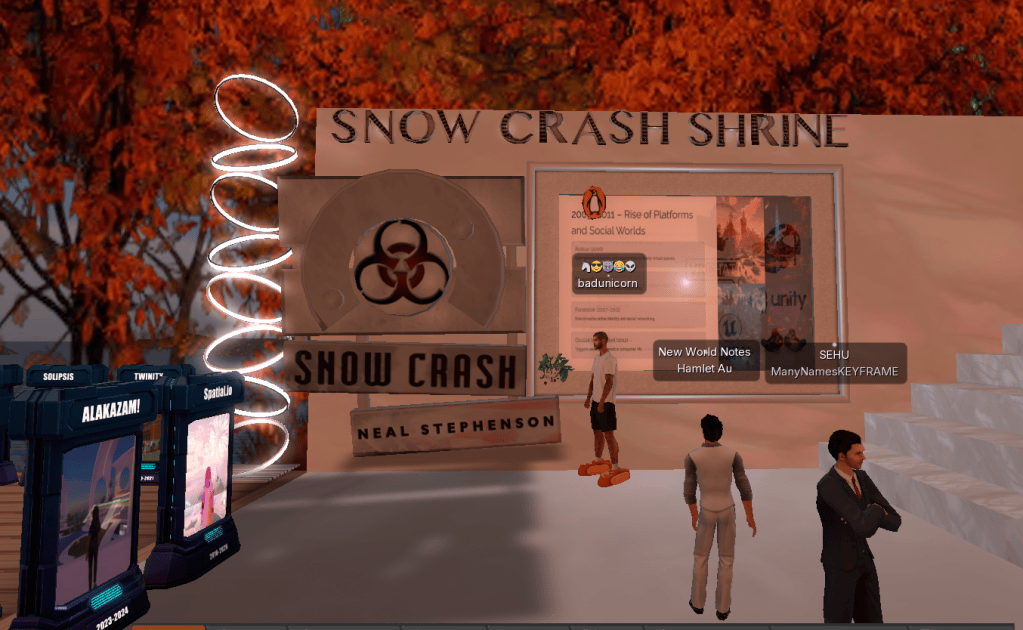
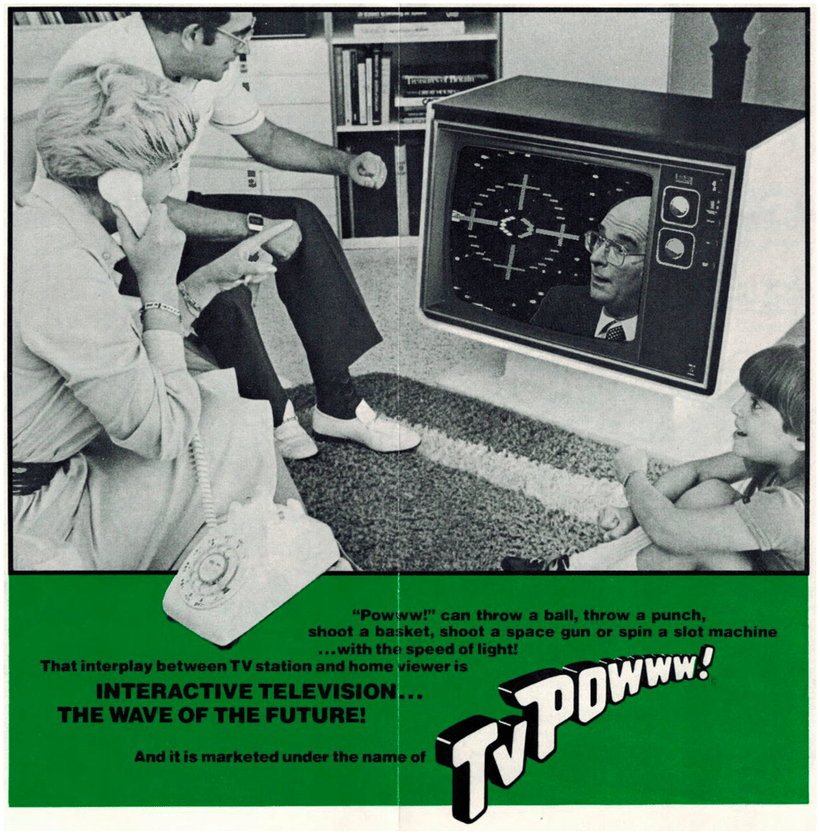
"Polygon Sea" is a rocking, Radiohead-ish new track (recently featured on the BBC!) by Alien Alarms, the one-man band fronted by Jim Purbrick. (Disclosure: A buddy from way back in our Linden days.) It's inspired, Jim tells me, by "Radiohead's 'Pyramid Song', the billionaire space race and the Second Life residents who used to ask me about uploading their consciousness into SL."
Cajsa Lilliehook covers the best in virtual world screenshot art and digital painting
The Psycho Blog’s most recent post has an awful title but an amazing picture. I love how the picture divides diagonally between the dark and the light (not that light) to show his flight through the air. I don’t know why he’s carrying something in each hand, but it does add spots of bright color.
Techno-Vernacular Creativity and Innovation is a new book from MIT Press (available on Amazon here and on Bookshop here) by Dr. Nettrice Gaskins, someone I've written about and admired for years. One of the first and best academics to explore and write about Second Life as an artistic platform, her debut book focuses on a related but far more crucial topic:
"The focus of the book is on underrepresented artists and students from their communities who engage technology in culturally relevant ways," Nettrice tells me. "This includes works by artists who engage with virtual reality such as Amelia Winger-Bearskin, Stephanie Dinkins, and LaJuné McMillian."
Here's an example of that with an excerpt from the book — plus a limited time 10% discount offer:
Part 4 of Matthew Ball's Metaverse Primer includes a personal story highlighting just how much computing power a Metaverse worth the name will require: The launch of Rival Peak, a "Massively Interactive Live Event" produced by one of the venture capitalist's portfolio companies. (Trailer above: Basically a reality TV competition show but starring NPCs in a virtual world, streamed to Facebook Watch.) The show required so much computing power to deploy, Amazon Web Services briefly capitulated to its demands:
In fact, it barely operated on AWS. With eight environments (production, backup, staging, QA and development), each of which was supported by over a dozen GPUs and hundreds of other CPUs, Rival Peak once ran out of GPU servers on AWS, and, during testing, routinely exhausted available spot servers.
Because there were no specific players (let alone a ‘player one’), Rival Peak doesn’t fit the instinctive definition of the Metaverse. However, the operation of a persistent and unending virtual world that supports unlimited interactions, each with lasting consequences, is as close to the end-state Metaverse as any other. And even in its nascent form, and without requiring meaningful consumer-side processing, it was running out of compute.
Rival Peak is not even a single shard virtual world with live user-controlled avatars dynamically creating content, yet the computing power required to achieve even its limited amount of interactivity, while having it simultaneously experienced by tens of thousands of concurrent users, was just too much for AWS to handle.
This takeaway stands out most to me with Part 4 (just as it did with Part 3 and networking): The ideal Metaverse will require a significant leap in our existing technology.
Now that we know that come month's end, gachas gotta get gone, please take this survey asking how their removal will impact the Second Life economy. While Linden Lab releases few economic/user stats to the public, we can track sim ownership and concurrency rates via third party data sites like Grid Survey.
Hence the survey questions above. Since SL gachas are extremely popular and lucrative, we may see the pang of their loss in a decrease of sims and concurrency.
… and then again, we may not. For instance, when Second Life casinos and other forms of explicit gambling were banned in 2007, many predicted it spelled the end of Second Life. But, as Grid Survey's Tyche Shepherd points out, that was not the case:
Cajsa Lilliehook covers the best in virtual world screenshot art and digital painting
Zoota Manoota’s photos are extraordinary. I love “All the Children Are Scattered” with its gorgeous and intense blue to yellow gradient and how the texture overlay gives it the craquelure of an old painting. I love everything about this picture. The people look so serene with their eyes closed as they wait for the sun to which they can turn.
There’s an eerie parallel to these Silicon Valley projects and the sci-fi novels that inspired them. Stephenson’s Metaverse thrives as the real world descends into misery—the US undone by crime and chaos, most of Asia ravaged by economic collapse. In Ready Player One, the 2011 bestseller that Steven Spielberg is adapting for film, the poor live in stacked trailer homes and spend most of their squalid lives logged into a metaverse called Oasis. Even as entrepreneurs… build actual metaverses of their own, the real world also faces a future shaped by economic uncertainty and global climate change.
In both novels, the strong implication is that the Metaverse is popular in the future because real life is too horrible to bear. I've brought this point up to several Metaverse developers, and they've consistently dismissed the connection; many of them have argued that the dystopian aspect is merely for the sake of telling an exciting story.
Michael Abrash, Chief Scientist at Oculus, had a typical reply to me when I raised the issue back then:
Cajsa Lilliehook covers the best in virtual world screenshot art and digital painting
Moi’s photostream is full of charming pictures like this one that offer just a touch of the absurd such as this plane's homage to Leonardo da Vinci’s flying machine. Not to mention, the flying machine is piloted by a teddy bear. I can totally see a cat enjoying a ride on the wings. They love heights. I love how the plane fills the frame is on a slight diagonal. Her braid dives us the sense of movement. I want to be there with them.