Wagner James Au / New World Notes

Author, strategist, virtual world reporter

Contact me!

Bio / CV

My Patreon Supporters

Hypnotic Romance, an SL sim with secluded spaces for couples. Click here to teleport.

The Virtual Worlds Museum. Click here to teleport to their Second Life hub with tribute to sunsetted worlds!

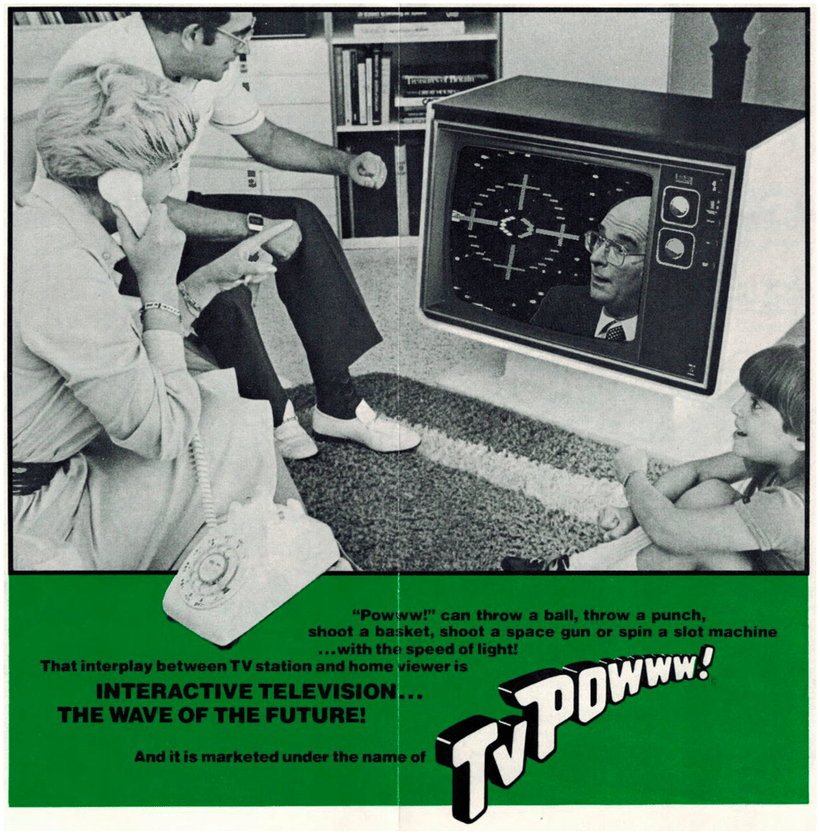
“TV POWWW!” by Tom Boellstorff & Braxton Soderman. Read about the first televised videogame here.

The Fitting Room: Try out new SL fits in a secure, private space. Click here to teleport.

Breedables CoOp, helping the SL pet community grow through shared resources. Go here to get started.

  • Above: Hanna's view of Ukraine last March; Hanna's view of Ukraine this month

    Last March, Hanna, Ukraine-based creator of the beloved SL fashion brand OSMIA, over 6 months pregnant, was hiding out in a city under active Russian occupation.

    "I'm having a hard time mentally," she messaged me from a basement at the time. "The streets are really dangerous."

    This week — when she also happens to be celebrating her birthday — she messaged me a much more optimistic update, and the photo above right: Her baby was safely born, she's escaped with her family to a relatively safe part of Ukraine, and lives in a well-kept home by the forest. In a free part of Ukraine.  

    But that safety is still relative:

    (more…)

  • Serene Footman SL Sim Flickr

    Cajsa Lilliehook covers the best in virtual world screenshot art and digital painting

    Ecce, nunc in pulvere dormiam

    et si mane me quaesieris, non subsistam.

    Quoting from the book of Job, Jade K.oltai announced the offline death of her sim-building partner Serene Footman with this photo of Isle of May. With this photo above, she announced that she resurrected their Isle of May in his remembrance. [Click here to teleport to the Isle of May

    As someone who spends a lot of time browsing SL Flickr, I’ve long noticed that their sims are the most popular sites for photos. Footman wrote about their work (and its relationship to real life sites) in his blog Furillen. In all, they created thirteen gorgeous sims. 

    Here's some images from the late Serene's Flickr. This is a lovely whimsical pic:

    Party pooper at the silent disco.

    //embedr.flickr.com/assets/client-code.js

    This one below announces the opening of the last sim that he and Jade created. It's different from his usual work because he added a texture layer to give it a painterly feeling:

    Ojuela

    In this one below, he most explicitly shares about his coming death, and cites "Crossing the Bar" by Tennyson, a poem that always makes me cry (my mom had me memorize it):

    //embedr.flickr.com/assets/client-code.js

    Crossing the Bar

    //embedr.flickr.com/assets/client-code.js

    Twilight and evening bell,

    And after that the dark!

    And may there be no sadness of farewell,

    When I embark…

    Second Life residents are mourning the loss of Serene Footman with gratitude for his and Jade’s work and with many photos expressing their feelings. 

    For some of the photos honoring Footman, click here:

    (more…)

  • Cory Ondrejka SL Facebook Google

    Reflecting on the Wall Street Journal's podcast series on the rise and fall (and rise) of Second Life, along with my own chats with him for the upcoming book, Second Life's founding CTO Cory Ondrejka recently posted a thoughtful analysis on the topic in social media. With his permission, here it is in full, reflecting his breadth of knowledge on the subject and the industry as a whole. (Cory is now technical advisor to Google's CEO.)

    Between The Journal, talking to Wagner James Au, and the general noise around metaverse-y stuff, lots of discussion about why Second Life has been unable to break out from the plateau of 15 years ago.

    Everyone’s got opinions here — and I expect many of them are partially right — but perhaps it’s not that complicated.

    If we start in 2007, SL is still growing but churn is making it clear that it’s a very challenging experience to really connect with, and tech limitations are hurting some of the most exciting use cases, but those who do navigate through the challenges keep showing there is something incredibly compelling about SL, about cocreation and shared experiences in places.

    But then technology changed (iPhone and web supplanted native PC executables as primary product experiences for most people, SL was not well positioned to follow this pivot and the transition applied a second constraint on growth — beyond churn — impeding resources to support dramatic change).

    Sometimes companies survive these transitions — Facebook with mobile, Intel with CPUs, Microsoft with cloud — but it’s never easy.

    Plus Linden had two additional challenges:

    (more…)

  • Update, October 17: Carmack later acknowledged that Rec Room and VRChat do make money for Meta via 30% commissions on in-app payments. However, as most free-to-play multiplayer games/worlds monetize at under 10% (usually much less), it's still likely the case that the vast majority of Rec Room/VRChat players on Quest aren't paying Meta anything through those platforms.

    I noted yesterday that the Quest 2 attach rate seems pretty small based on Meta's reported revenue numbers, but the rest of that story — and the explanation for why the Quest 2's retail price was recently raised — comes from senior Quest advisor John Carmack himself, in his Connect 2022 keynote.  

    Basically, he says, Quest 2 owners are not buying enough premium content and instead, are using their headset for free-to-play metaverse platforms VRChat and Rec Room.

    "When you have some of the most popular apps on Quest are free apps, VRChat and Rec Room, that we get no revenue from at all, and while they are sitting there at the top of our ranking list in many cases, there's there's not a lot of internal push for that," as he puts it. (Watch above at about 41 minutes in.)

    This is a pretty jaw-dropping revelation. Meta developed the Quest 2 and the Quest app store to grow the market for its metaverse platform. But instead, Quest 2 owners are going in droves to VRChat and Rec Room — leading metaverse platform competitors.  (Rec Room alone, as I recently reported, had 3 million active VR users, most of them on Quest.)

    In fairness to Carmack, he adds that he's completely supportive of that happening. Full context of the quote below, and thanks to the eagle eyes of VR devs Derek Johnson and Kim Baumann Larsen for catching this point that I originally missed! 

    (more…)

  • 52391535970_c78fba7148_c

    Cajsa Lilliehook covers the best in virtual world screenshot art and digital painting

    Cain Evergarden’s Second Life is so much more exciting than mine ever was. Here he is in a two-fisted gun battle with the bad guys…unless he’s the bad guy. It is unclear. I just naturally assume people see and play the good guys in role play, but that would be impossible. You can’t roleplay a good guy without a bad guy.I am impressed with how simply he conveys that sense of jeopardy with his arms raised, shooting away, and an intense scowl of concentration. 

    For more fab roleplay, click here:

    (more…)

  • Quest 2 sales estimate October 2022
    Meta Connect's keynote came and went today, and to my surprise, there were no announcements of the Quest 2's total install base so far. However, in a story earlier this week, the New York Times estimated it to be 15 million:

    The company’s consumer V.R. headset, the Quest 2, is the most popular V.R. headset on the market with more than 15 million sold, according to outside estimates. Its Oculus V.R. app — which has since been rebranded Meta Quest — has been installed over 21 million times on iOS and Android devices, according to an estimate by Sensor Tower, an app analytics firm.

    That tracks with my own Quest 2 install base estimate last April, when I pegged it at around 12 million back then.

    That also gives us a good way to gauge the numbers that Meta did announce today — revenue for top-selling games un the Quest so far:

    Of the main Quest store titles, 33 have grossed more than $10 million and 55 titles have exceeded $5 million in gross revenue...  The Quest store launched with the original standalone headset in May 2019 with Meta saying more than $1.5 billion has been spent on games and apps since that time.

    Other notable data points shared by Meta include The Walking Dead: Saints & Sinners surpassing $50 million in revenue on Quest alone, “nearly double its revenue on all other platforms.” Blade & Sorcery: Nomad made $1 million in two days while Zenith: The Last City crossed that threshold in 24 hours. Resident Evil 4, meanwhile, made $2 million in the first 24 hours. Stress Level Zero’s Bonelab made $1 million in less than an hour, establishing it as “the fastest-selling app in Quest history.”

    Emphasis mine, because now we can play: Guess the Quest 2 attach rate! (I.E., how many Quest 2 software titles are Quest 2 owners buying?)

    How does 1-2 games per Quest 2 owner sound? Because based on my back-of-envelope math, that's about what it is. 

    Here's the details:

    (more…)

  • 2022-10-11

    Cajsa Lilliehook covers the best in virtual world screenshot art and digital painting

    This picture by Kev Inette was created to honor the women of Iran who are risking their lives to protest the murder of Mahsa Amini who died after being arrested. Nearly 200 people have died in the protests and over 1,000 have been wounded. The uprising continues to grow despite the risk of police firing on protesters. Kev wrote: 

    "Les femmes en tant qu'individu ont le droit à leurs propres droits. Elles ont leurs demandes et ont raison de réclamer des droits"

    This translates as "Women as individuals are entitled to their own rights. They have their demands and are right to demand rights" 

    Make it so. 

    For more Second Lifers honoring the women of Iran, click here:

    (more…)

  • Avatar prejudice Second LifeGreat rant from reader "Nadeja", leaping off from my interview in CNN about prejudice against non-attractive human avatars — specifically, on how it impacts female users in virtual worlds:

    Sadly, it's true.

    Also it's more than just being fat or slim.

    I had messages from guys commenting on the physical appearance of my avatar (i.e. various body parts) and my outfits too, grumpily and selfishly comparing that with their own personal tastes, [as] if the only purpose of women's avatars (and I suspect also the purpose of women in real life) were to please them.

    That "no fat chicks" sign, too, was indeed targeting women: nobody cared if guys were fat or slim. I don't mean that guys have no issues looks-wise (as [reader] Penny says, height for them), but there is a lot of pressure on women in terms of what they look like.

    Although I usually receive compliments, my avatar has been bodyshamed for my thighs being "too fat".

    Someone else bodyshamed in a very paternalistic way my same avatar for being "too much skinny".

    Therefore, besides being selfish, is also foolish, because beauty standards are so subjective.

    But it is worse than that.

    If you make your avatar based on your real life appearance and you have little self-esteem already, that social pressure and comments don't help and you may end up looking at yourself in the RL mirror, feeling insecure and wondering how much obese or anorexic you look, even though you are neither. When you are exposed to this in real life, some girl ends up actually anorexic. But even if it's only a virtual world, it contributes, especially if your avatar is like yourself. Another drop, and another drop… So it's also toxic and can have consequences.

    Since it's silly, you can ignore that, right? It's not so simple.

    Nadeja explains why, also addressing my point that the most popular metaverse platforms, Fortnite and Roblox, do not have realistic avatars, but cartoonish or LEGO-like ones (respectively): 

    (more…)

  • Starting October 21 on Amazon Prime starring Chloë Grace Moretz, this is the teaser trailer to The Peripheral, based on William Gibson's novel of the same name. Premise:

    Flynne Fisher lives in the rural American South, working at the local 3D printing shop, while earning much needed extra money playing VR games for rich people. One night she dons a headset and finds herself in futuristic London—a sleek and mysterious world, alluringly different from her own hardscrabble existence. But this isn’t like any game she’s ever played before: Flynne begins to realize it isn’t virtual reality… it’s real. Someone in London, seventy years in the future, has found a way to open a door to Flynne’s world. And as utterly beguiling as London is… it’s also dangerous.

    The plot is a perfect example of how Gibson more or less walked away from writing "science fiction" per se, since the present keeps catching up with any future he might imagine. For example: While a poor person "playing VR games for rich people" might seem like a strange, fantastical notion, Oculus VR founder Palmer Luckey talked with me about that very idea as an actual possibility… 6 years ago.

    I also like the "virtual reality" aspect of the series seems to be shot in real life, something Neal Stephenson just talked with me about — i.e., high-end 3D graphics are so realistic now, you might as well shoot the Metaverse or another virtual world without using CGI:

    (more…)