
Above: Insider's attempted Metaverse debunking comes replete with VR headset illustration indicating Insider's editors don't actually understand the concept
My Patreon Supporters
Hypnotic Romance, an SL sim with secluded spaces for couples. Click here to teleport.
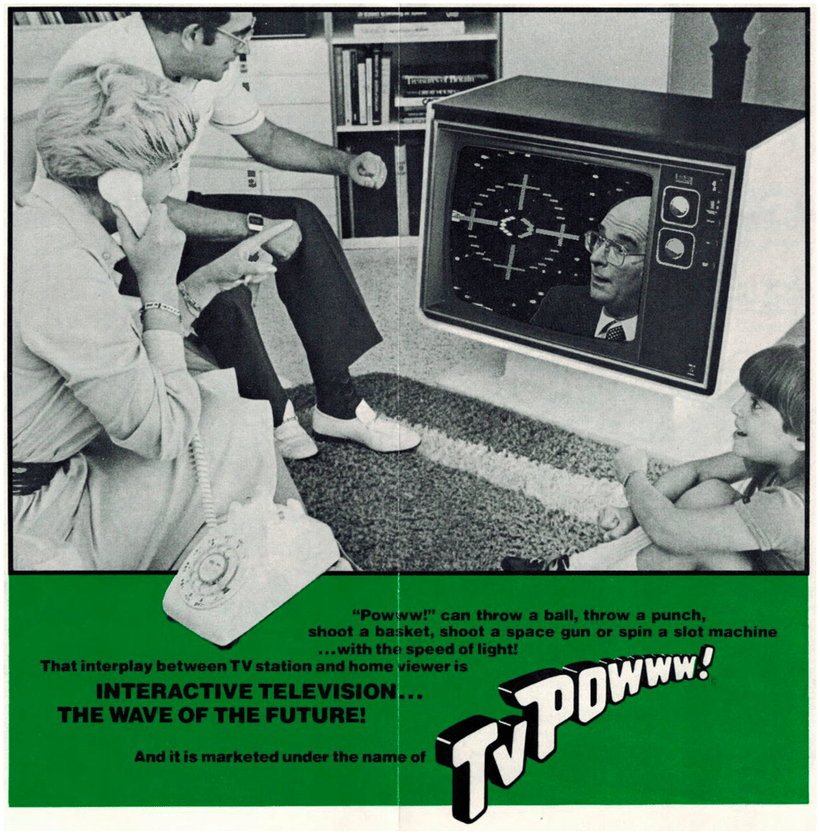
“TV POWWW!” by Tom Boellstorff & Braxton Soderman. Read about the first televised videogame here.
The Fitting Room: Try out new SL fits in a secure, private space. Click here to teleport.
-
Cajsa Lilliehook covers the best in virtual world screenshot art and digital painting
LeYo [MaziKeenFr] is an unusual blogger in that most of her pictures are in black and white. Not all. Occasionally she does a color picture when it’s important to present the items in color. She is a great blogger who seeks out actual clothes along with the sexy lingerie and clubwear. I love this gorgeous gown with the dramatic collar. It’s from Sascha’s Designs. The lighting emphasizes the contrast between her skin and the gown.
- Sascha's Designs. Collier Black Gown . Mainstore
For a shocking, but safe club dress, click here:
-
The Metaverse is very much not dead, but while debunking random hit-and-run diatribes to that effect, I'm in the weird position of also wondering how (or even if) the 600 million+ active users across various metaverse platforms can (or should) somehow be seamlessly unified.
Which paradoxically, means debating the approach taken by Metaverse-as-a-Service-startup Lamin1, co-founded by literal Neal Stephenson.
Last week Lamina1 published a massive white paper on the topic, leading me to debate the value of walled gardens with CPO Tony Parisi.
This week, let's focus on its approach to interoperability based on the blockchain:
Specialized metachains allow for the creation of blockchain-based applications and experiences in ways that overcome the limitations of today’s monolithic chains. Additionally, they allow for a much wider variety of businesses and use cases than today’s metaverse “walled gardens,” empowering the users and the market –– rather than a centralized, risk-averse entity focused on specific business models –– to decide on the value of things that get made.
We also believe that the future metaverse also has to combine the best of immersive computing tech with the best of blockchain to ensure commercial success, longevity, transparency, and privacy online. On-chain rights management, distributed simulation, and storage services would help get us there, in a way that’s accessible to all creators, not just a small club controlled by the few.
OK, but wait: Won't blockchains hurt consumer performance, since they tend to be much more time-consuming to query than a centralized database? In a real time experience, even several seconds of additional wait time can be a deal breaker.
Will Carter, CTO of LAMINA1 and co-author of the white paper, argues not so, but also has some thoughtful qualifiers:
-
Excited to tease my book cover for "Making a Metaverse That Matters" from Wiley, out next month! Here's how to pre-order:
- On Amazon here
- Or on Barnes & Noble here
- Or on Bookshop.org benefiting indie bookstores here
This isn't the full book cover by the way, because it also has some very flattering blurbs from various tech luminaries. My favorite line: "I only wish Mark Zuckerberg could have read it before changing the name of his company." More soon!
-
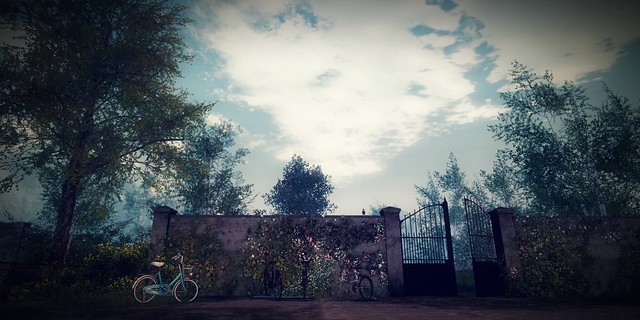
Cajsa Lilliehook covers the best in virtual world screenshot art and digital painting
Mari Seesaw’s pictures have an element of Where’s Waldo about them because you sometimes have to search for the ubiquitous cat. Exploring Second Life as a feline gives her photos a whimsicality along with the beautiful landscapes she shows us. And she also gives us the sine qua non of any serious SL traveler, the SLURL. [To visit, click here]
-
Cajsa Lilliehook covers the best in virtual world screenshot art and digital painting
Is there anyone in the world unaware that Charles III was crowned on Saturday? Many Second Lifers certainly celebrated. Here is Mrs Sassypants bringing together a group of friends to celebrate. And all decked out in red, white, and blue.
For more from the coronation, click here:
-
Above: Insider's attempted Metaverse debunking comes replete with VR headset illustration indicating Insider's editors don't actually understand the concept
Insider just ran a putative obituary for the Metaverse that's so incandescently wrong, it reminds me of that famous Mary McCarthy line, "every word she writes is false, including ‘and’ and ‘but.'" Obviously I'm somewhat (very) biased on this topic, but seeing as author Ed Zitron's diatribe has gone viral (as he himself boasts), it deserves closer scrutiny.
The trouble begins right in the third sentence:
The capital-M Metaverse, a descendant of the 1982 movie "Tron" and the 2003 video game "Second Life," was born in 2021 when Facebook founder Mark Zuckerberg changed the name of his trillion-dollar company to Meta.
It's mind-boggling how a single sentence of only 35 words can be so redolent of fail. To start:
On a pure factual basis, Zuckerberg changing Facebook's name to Meta in 2021 was not the birth of the Metaverse, even from the skewed perspective of Wall Street. From that vantage, a better date would be late 2020, with Roblox's IPO filing, which literally includes a (pretty good) definition of the Metaverse:
-
Cajsa Lilliehook covers the best in virtual world screenshot art and digital painting
Mei Mei’s “All my best memories are with you” is not just a darling picture of two friends, but one that demonstrates how the details can reinforce the idea of a picture. The two of them are wearing the same school uniform but in different colors. Now, with a casual glance, you won’t even notice that the background elements are the same colors, with the pink structures behind the woman in pink and the blue elements behind the woman in blue. It’s something you might not see, but you will feel it.
For more next-level pics, click here:

