
Wagner James Au / New World Notes

Author, strategist, virtual world reporter

Contact me!

Bio / CV

My Patreon Supporters

Hypnotic Romance, an SL sim with secluded spaces for couples. Click here to teleport.

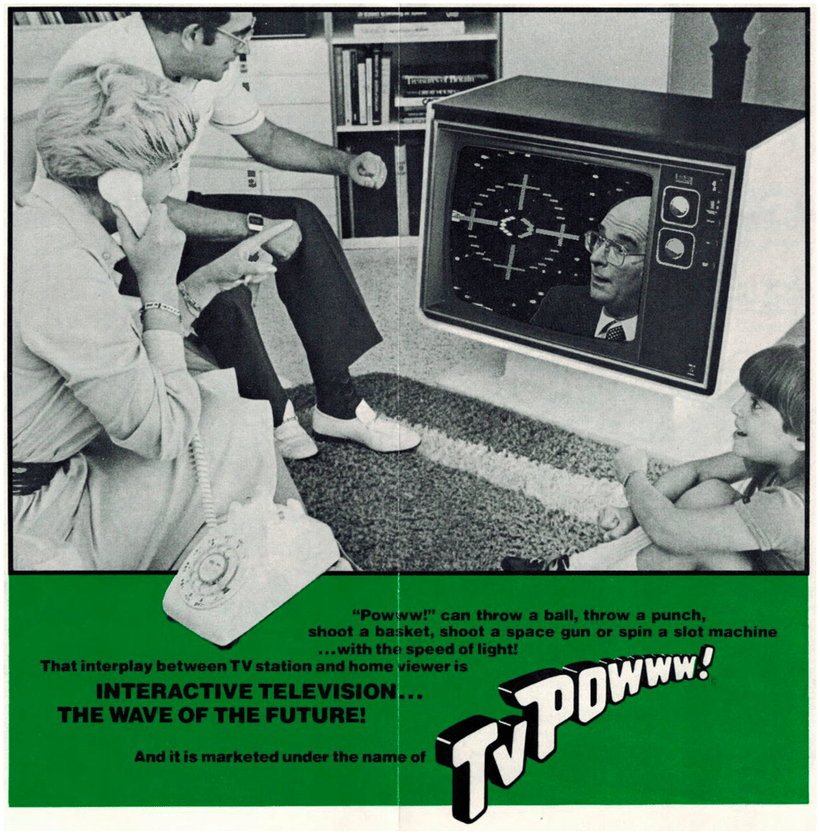
“TV POWWW!” by Tom Boellstorff & Braxton Soderman. Read about the first televised videogame here.

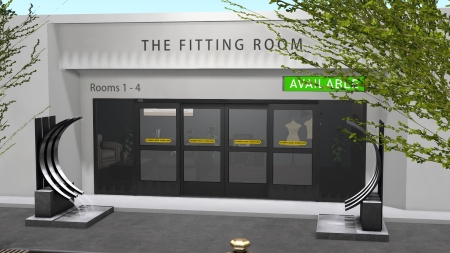
The Fitting Room: Try out new SL fits in a secure, private space. Click here to teleport.

  • [To the tune of "Guns and Ships":]

    How does a metaverse platform in need of a shower
    Somehow become a global superpower?
    How do we emerge from the Age Cliff quagmire
    Leave the virtual world waving stock prices higher?

    Yo, turns out we have a secret weapon
    A Broadway brand you know and love, that's unafraid to step in

    He's constantly confusin', confoundin' the OpenAI henchmen
    Everyone give it up for NASDAQ's favorite fighting Builderman!

    While Roblox now has 300 million monthly active users, about the population of the United States of America, it's still striving to diversify the demographics of  its user base, about 75% of whom are under the age of 17. Roblox is actively confronting the dreaded Metaverse Age Cliff*, one of two key challenges to mass adoption (see below).

    One possible solution: Import a ridiculously popular Broadway musical about the founding of the United States of America:

    In the Hamilton Simulator, players use their own avatars as they rub shoulders with the musical’s characters and negotiate through 10 levels set during the Revolutionary War. It starts at the New York docks and the goal is to free the city from British yoke. Appropriately, the music-filled game requires no real money from players.

    The game has the blessing of writer-composer Lin-Manuel Miranda, whose blockbuster musical charts the rise and fall of statesman Alexander Hamilton and stresses his orphan, immigrant roots as well as his near-Greek tragedy of a fall.

    Click here to start making redcoats redder with bloodstains.

    Hamilton is actually an ideal IP to bridge the Metaverse Age Cliff, since the Broadway play is already popular with people across many generations, beginning with teenage theater kids, all the way up to Barack Obama.

    Since launching last Friday, however, the Hamilton Simulator's audience numbers have actually been pretty mid: According to RoMonitor stats (see screengrab below), it's only attracted less than 500,00 visits:
     

    (more…)

  • Night stop

    Cajsa Lilliehook covers the best in virtual world screenshot art and digital painting

    I like exploring SL groups because I always find a few new people who do great work. I checked out SL Noir, influenced perhaps by the book I recently finished, Denver Noir. It’s part of a series of what you might call around-the-world in noir. They’ve done noir Paris, Rome, Hong Kong, and Baghdad, but when will they do Second Life? At least the SL Noir group will give them a place to start looking. 

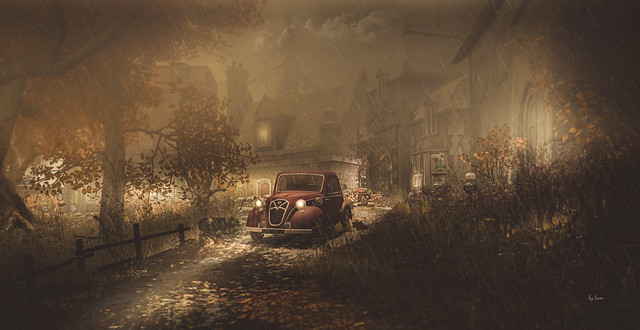
    “Night Stop” from Lam Erin does what the best noir stories do. It suggests, it doesn’t tell. The road is narrow. The trees grow so close to the road, they may fall and block the road in high winds. The rain is heavy and there are storm clouds in the sky. The car is a paltry refuge from the elements, but they home where they have stopped cold and unwelcoming without a single light. At least Brad and Janet saw a light in the darkness. 

    For more noir, click here:

    (more…)

  • Ultima Underworld Metaverse inspiration

    Watching Philip Rosedale and Avi Bar-Zeev talk about early days in metaverse development, reader "Nadeja" points out another early milestone that's often under-appreciated — the launch of pioneering game Ultima Underworld: The Stygian Abyss

    Another interesting thing is that in March 1992, just a few months before the publication of Snow Crash (June 1992), another influential work in the history of virtual worlds came out: Ultima Underworld. Although it wasn't set in a cyberpunk world and it was single player (as a RPG, you interacted with NPCs), the player's character was also called Avatar (apparently, Stephenson came to the idea independently, even though it was called "Avatar" in the Ultima series since Ultima IV, 1985), the gameplay was nonlinear and with emergent storytelling, it was an immersive sim:  There was crafting, fixing the equipment, cooking and eating, you needed sleep too, and to carry different kind of lights, each illuminating the walls differently and eventually burning out.

    Its first-person 3D engine was quite sophisticated for the time (and influenced Carmack's Wolfenstein 3D engine too, that was a lot simpler and flat, but also a lot faster): you could look up and down; when you walked, the camera would bob slightly to simulate the motion of the walking; you could jump, swim, and even fly, there were slopes and bridges, you could drop items inworld from your inventory (not too different than "rezzing" in SL), you could take notes on the map, and many other things…

    It gave you the sense of being in a real environment, freely explorable anywhere and interactive, and with customizable avatars. By today standard maybe you won't call it a virtual world; but in 1992, when Snow Crash was published, Ultima Underworld was the closest thing to it. So this is the best Neal Stephenson or someone else could get from the most powerful PCs (and taking most of the hard-disk space) in 1992.

    Great points! To which I can add a fun fact: Back in 2004, since I knew him through some of my early articles, I invited lead Ultima Underworld developer Doug Church to visit Linden Lab and judge an early Second Life game development contest.

    Philip was excited to meet Doug, because as I wrote in the first book, Ultima Underworld strongly enforced Philip Rosedale's vision of creating a virtual world:

    (more…)

  • Ultima Underworld Metaverse inspiration

    Watching Philip Rosedale and Avi Bar-Zeev talk about early days in metaverse development, reader “Nadeja” points out another early milestone that’s often under-appreciated — the launch of pioneering game Ultima Underworld: The Stygian Abyss

    Another interesting thing is that in March 1992, just a few months before the publication of Snow Crash (June 1992), another influential work in the history of virtual worlds came out: Ultima Underworld. Although it wasn’t set in a cyberpunk world and it was single player (as a RPG, you interacted with NPCs), the player’s character was also called Avatar (apparently, Stephenson came to the idea independently, even though it was called “Avatar” in the Ultima series since Ultima IV, 1985), the gameplay was nonlinear and with emergent storytelling, it was an immersive sim:  There was crafting, fixing the equipment, cooking and eating, you needed sleep too, and to carry different kind of lights, each illuminating the walls differently and eventually burning out.

    Its first-person 3D engine was quite sophisticated for the time (and influenced Carmack’s Wolfenstein 3D engine too, that was a lot simpler and flat, but also a lot faster): you could look up and down; when you walked, the camera would bob slightly to simulate the motion of the walking; you could jump, swim, and even fly, there were slopes and bridges, you could drop items inworld from your inventory (not too different than “rezzing” in SL), you could take notes on the map, and many other things…

    It gave you the sense of being in a real environment, freely explorable anywhere and interactive, and with customizable avatars. By today standard maybe you won’t call it a virtual world; but in 1992, when Snow Crash was published, Ultima Underworld was the closest thing to it. So this is the best Neal Stephenson or someone else could get from the most powerful PCs (and taking most of the hard-disk space) in 1992.

    Great points! For which I can add a fun fact: Back in 2004, since I knew him through my early articles, I got lead Ultima Underworld developer Doug Church to visit Linden Lab and judge an early Second Life game development contest.

    Philip was excited to meet Doug, because as I wrote in the first book, Ultima Underworld strongly enforced Philip Rosedale’s vision of creating a virtual world:

    (more…)

  • Neal Stephenson Wagner James Au Metaverse interview

    In case you missed it, FastCompany recently featured an excerpt based on my extensive interview with Neal Stephenson for the book. Highlights include his own definition of the Metaverse, reports that he looked into building it back in the 1990s right after Snow Crash was published, and that 1992 novel's long-delayed Hollywood adaptation. Marco Brambilla, director of the not horrible Stallone/Snipes 90s sci-fi movie Demolition Man, was attached to direct it as far back as 1996; the project's since changed Hollywood hands for now nearly 30 years.

    So we talk about that, and I get to point out how the Metaverse concept is actually larger in real life than what he first imagined — which elicits a classic taciturn Stephenson reply:

    (more…)

  • Milena Carbone SL Artist Flickr

    Cajsa Lilliehook covers the best in virtual world screenshot art and digital painting

    Milena Carbone is a gifted artist who excels in creating amazing pictures, dance performances, and writing. A true triple threat. “Dissonance” is a striking example of how deeply she looks beneath the surface. She recognizes that “life goes on” while death rains down on Ukraine. She sees the dissonance in the world where there is the sublime of dance and the savagery of war. 

    For more of her thought-provoking work, click here:

    (more…)

  • 6a00d8341bf74053ef02b75197f9d9200c

    Sanny Yoshikawa が、New World Notesのなかから、毎月おすすめのバーチャルワールドニュースを日本語で紹介します

    Sanny Yoshikawa covers the monthly virtual world highlights from New World Notes for virtual Japan.


    (more…)

  • Ukraine tai chi SL

    Cajsa Lilliehook covers the best in virtual world screenshot art and digital painting

    🇺🇦 Miss Little Shiny Dust 🇺🇦” is a recent post in Lori Novo’s self-titled blog where she combines fashion with travel blogging. Her blog’s tag line is “ROAMancing Second Life.” 

    In this post, Lori had decided to feature someone else in her blog, just looking around the virtual world until she found someone whom she thought had style or who would appreciate the gift of being featured. She headed to Tempura Island, a place where there are almost always a few people.” 

    She went to the Tai Chi class where she met Little Miss Shiny Dust, a child avatar whose user is from Ukraine in real life, and who finds peace and relaxation in Tai Chi. 

    Lori shared a bit of their conversation. 

    блискучий пил (floeckchenmondstaub): just here to find peace and relax

    Lori Novo: yes, Tai Chi is very relaxing

    блискучий пил (floeckchenmondstaub): yes it is

    Lori Novo: it helps me too when I am sad

    Lori Novo: or worried

    блискучий пил (floeckchenmondstaub): tempura is what we need

    Lori Novo: I'll keep you and your beautiful country in my heart and my prayers

    блискучий пил (floeckchenmondstaub): ty so much

    Instead of featuring fashion choices on display, she provided a list of ways to support people in Ukraine. (Below.) Be sure to click through to read more of her conversation and several pictures of Little Miss Shiny Dust and the Tai Chi class.

    (more…)

  • Philip Rosedale's latest vlogcast interview is with Avi Bar-Zeev, an XR/metaverse pioneer who's been doing this so long, he was working for a virtual world company in the 90s which Neal Stephenson used to visit shortly after Snow Crash came out — when Stephenson first reportedly looked into creating the Metaverse himself. (At least that's what Avi remembers; more on that below.)

    Since then, Avi helped create Second Life's prim-based creation system (a topic he discusses with Philip here), and eventually went on to do experience design work for Apple's VisionPro. As he tells Philip: 

    "It's really good for a lot of certain applications but what Apple's throwing down the gauntlet with is saying this is the next user interface paradigm, and it's the one that's gonna displace the mouse and windows… It's not just about having more screen real estate. It's about having the content come off the screens. And so a lot of the toolkits they've shown make it easy for you to pop stuff out of 2d into 3d including personas." (Personas being what Apple calls "avatars").

    In the interview Philip mentions an amazing user-creation demonstration of the power of prims — watch that below, plus an excerpt of my chat with Avi from Making a Metaverse That Matters:

    (more…)